Description
Invasive Physiotherapy Course
1.930,00 €Add to cart
Hours and place
- Opening of the virtual campus: Online access to the virtual campus will be made from a week before the practical part of the course.
- We will hold some synchronous meetings to solve questions in real time and delve into the theoretical contents. Note: Specific dates and times will be notified by email and on the notice board well in advance, and will be saved on the virtual campus.
- Face-to-face seminars:
- Seville Headquarters
- Seminar 1 – Dry puncture: February 13 and 14, 2027
- Seminar 2 – Musculoskeletal ultrasound: 13 and 14 March 2027
- Seminar 3 – Eco-guided dry puncture: 17 and 18 April 2027
- Seminar 4 – EPTE® Therapeutic Percutaneous Electrolysis: 22 and 23 May 2027
- Seminar 5 – Percutaneous Neuromodulation: 12 and 13 June 2027
- Malaga Headquarters
- Seminar 1 – Dry puncture: January 9 and 10, 2027
- Seminar 2 – Musculoskeletal ultrasound: 13 and 14 February 2027
- Seminar 3 – Eco-guided dry puncture: 27 and 28 February 2027
- Seminar 4 – EPTE® Therapeutic Percutaneous Electrolysis: April 3 and 4, 2027
- Seminar 5 – Percutaneous Neuromodulation: 24-25 April 2027
- Seville Headquarters
Schedules.
Saturday from 10:00 a.m. to 2:00 p.m. and from 3:00 p.m. to 7:00 p.m.
Sunday from 9:00 a.m. to 2:00 p.m. and from 15:00 to 18:00.
- Seville: Val Sevilla Clinic. Av. San Juan de la Salle, 21
- Málaga: Elite Clinic: Elite Clinic: Av. by Manuel Fraga Iribarne, 15 (entry from the back of the clinic), 29620, Torremolinos, Malaga.
1.930€
Modality: Blended
Duration: 140h (80h on-site + 60h online)
Places: 24
Credits: Pending granting
Tel. Coordination: 613294018
1.930,00 €Add to cart
Course summary
This training program offers an updated vision of invasive physiotherapy, as a fundamental tool in the treatment of patients with pain. The curriculum is structured in five blocks:
01.
Basis of musculoskeletal ultrasound.
02.
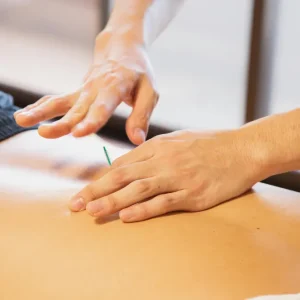
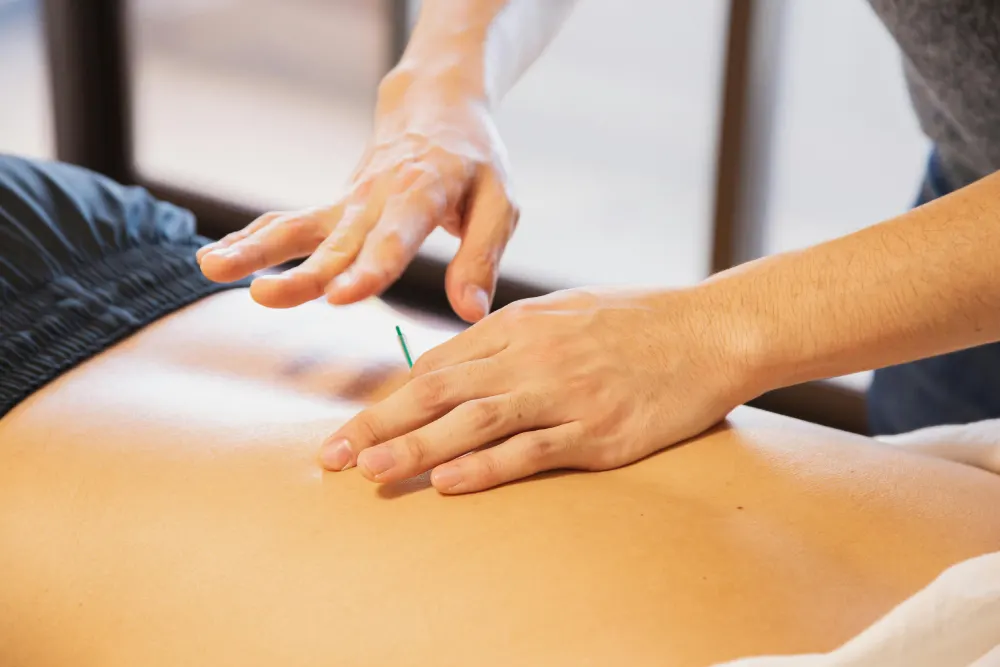
Mechanisms of action of dry puncture and main approaches.
03.
Use and management of echo-guided dry puncture.
04.
Mechanisms of action of percutaneous neuromodulation, indications and main approaches.
05.
Mechanisms of action of electrolysis, indications and main approaches.
Objectives
What are you going to learn?
The invasive physiotherapy course is developed to complement training in manual therapy, generating a work system that increases the potential for success in numerous pathologies, providing new tools for the physiotherapy approach.
The course seeks that the student is able to:
- Dry puncture: Correctly diagnose and treat myofascial trigger points in the cervical, temporo-mandibular joint, shoulder girdle, upper/inferior limbs, and thoracic and lumbar region.
- Musculoskeletal ultrasound: Handle the ultrasound as a diagnostic tool and guide, recognizing tissues (muscles, tendons, nerves, etc.) and carrying out accurate topographic approaches.
- Ecoguided puncture: Apply dry puncture safely and accurately under ultrasound control in deep or compromised structures (such as psoas, piriforme or multifids).
- Percutaneous neuromodulation: Intervene in the peripheral nervous system for pain control and neuromuscular dysfunction, knowing the neuroanatomy and applying specific protocols in peripheral nerves.
- Percutaneous Therapeutic Electrolysis: Treat tendinopathies (patella, Achilles, plantar fascia, etc.) through the application of galvanic currents, integrating this treatment with evidence-based therapeutic exercise.
Clinical Competence Objectives
- Safety and precision: Learn the safety criteria, contraindications and hygiene measures necessary in invasive procedures.
- Clinical reasoning: Integrate current scientific evidence with clinical practice to decide when and how to apply each technique.
- Functional evaluation: Use the ultrasound not only to puncture, but also to evaluate the functionality of structures such as the abdominal girdle or the pelvic floor.
Detailed information
Calendar
Seville: Feb 2027 – May 2027
Malaga: Jan 2027 – Apr 2027
Headquarters
Seville and Malaga
(The venue is selected at checkout)
Formalities
Bachelor's degree or Diploma in Physiotherapy or Senior Student
Price
1.930€
Accreditations
Pending application before the Continuing Training Commission of the Health Professions
Squares
24
Study plan
Theoretical Block: Digital Content (Online)
- Myofascial trigger point: definition and clinical characteristics
- Diagnostic criteria of a trigger point: activation and perpetuation factors, nutritional and metabolic factors, physical and mechanical factors, and psychological and stress factors.
- Analytical description of each muscle of the cervical region, of the temporomandibular joint, shoulder girdle, upper limb, thoracolumbar spine, lower limbs: anatomy, biomechanics, innervation, symptoms, differential diagnosis.
- Analytical examination, palpation and physical findings of trigger points: muscle examination, types of palpation.
- Treatment techniques: conservative and invasive (demonstration)
Ultrasound
- Introduction to ultrasound: Use of the ultrasound in physiotherapy. legal framework. Organizations in musculoskeletal ultrasound. Echo-guided physiotherapy techniques (RUSI, invasive physiotherapy)
- Physical bases of ultrasound.
- Ultrasound parameters.
- Adjustment of ultrasound parameters.
- Types of equipment.
- Types of probe.
- Types of images.
- Identification of artifacts.
- Eco-Doppler.
- Elastography.
- Tissue recognition: muscle, tendon, ligament, cartilage, synovial, nerve, blood vessels.
Echo-guided dry puncture approach
- Generalities of the echo-guided dry puncture.
- Principles of echo-guided dry puncture.
- Procedure.
- Measurements and references.
- Security.
- Advantages and disadvantages.
Percutaneous neuromodulation.
- Origins and basic principles of the NMP technique.
- Anatomy and neuroanatomy.
- Histology.
- Physiology of the nervous system.
- Study of pain and neurofunctionality.
- Physical principles of electrotherapy.
EPTE® Therapeutic Percutaneous Electrolysis.
- Tendon: Histology, mechanical properties and scientific update.
- Tendinopathy.
- Concept and applied terminology: Paradigm shift.
- Pathophysiology, new advances.
- Traction load, compression. Continium model.
- Tendon pain concept.
- Nervous ingrowth concept and neovascularization.
- Pro-inflammatory cytokines ratio and tendon lesion.
- Ultrasound: Update on imaging tests for the diagnosis of tendon pathology.
- Conventional ultrasound.
- Sonoelastography (Shearwave Ultrasound).
- Ultrasound Tissue Characterization, UTC Imaging.
- Scientific evidence: Clinical practice based on scientific evidence in the approach to tendon pathology and plantar fascia
- Therapeutic Exercise: Charge Concept. Exercise: Isometric, concentric, eccentric, plyometric. New lines of research and development: HSR (Heavy Slow Resistance) and isoinertial machine training.
- EPTE® Therapeutic Percutaneous Electrolysis.
- Therapeutic percutaneous electrolysis concept, EPTE®.
- Device and application, EPTE® concept.
Practical block: 5 face-to-face seminars
- Top limb topographic ultrasound.
- Shoulder and arm approach (muscle, tendon, joint, nerve and ligaments).
- Elbow and forearm approach (muscle, tendon, joint, nerve and ligaments).
- Wrist approach (muscle, tendon, joint, nerve and ligaments).
- Lower limb topographic ultrasound.
- Approach to hip and thigh (muscle, tendon, joint, nerve and ligaments).
- Approach for knee and leg (muscle, tendon, joint, nerve and ligaments).
- Ankle approach (muscle, tendon, joint, nerve and ligaments).
- Topographic ultrasound of the trunk and spine.
- Ecographic approach to the abdominal girdle.
- Ecographic approach to the paravertebral muscles.
- Introduction to clinical applications in physiotherapy.
- Functional evaluation Abdominal girdle.
- Multifid functional evaluation.
- Functional evaluation Pelvic floor (trans-abdominal approach).
- Ultrasound as an eco-guide tool for invasive techniques.
Dry puncture boarding
- Dry puncture approaches in the upper limb.
- Dry puncture approaches in lower limb.
- Dry puncture approaches on the trunk.
Eco-guided puncture approach
- Generalities of the echo-guided dry puncture.
- Principles of echo-guided dry puncture.
- Procedure.
- Measurements and references.
- Security.
- Advantages and disadvantages.
- Dry puncture approaches in the upper limb.
- Minor Pectoral.
- Coracobrachial.
- Anterior brachialis.
- Supinator.
- Round pronator.
- Dry puncture approaches in lower limb.
- Piriform.
- Psoas.
- Adductors.
- Popliteo.
- Posterior tibial.
- Short plantar flexor.
- Dry puncture approaches on the trunk.
- Multifido (cervical, dorsal and lumbar).
- Splenio.
- Long dorsal.
Percutaneous neuromodulation.
- ECO-GUIDED APPROACHES:
- Axillary nerve: control of dysfunction and pain.
- Radial nerve: specific treatment of lateral epicondylalgia.
- Median nerve: management of wrist pathologies.
- Ulnar nerve: medial epicondylalgia and non-hand pathologies.
- Femoral nerve: integration of hip and knee dysfunctions.
- Sciatic nerve: Dynamic control of the posterior chain.
- Tibial nerve: normalization of tone.
- Common peroneal nerve: proprioceptive work.
EPTE® Therapeutic Percutaneous Electrolysis.
- Sonoanatomy.
- Shoulder: Anatomical description of the structures to be explored and ultrasound examination.
- Elbow: Anatomical description of the structures to be explored and ultrasound examination.
- Knee: Anatomical description of the structures to be explored and ultrasound examination.
- Ankle: Anatomical description of the structures to be explored and ultrasound examination.
- Foot: Anatomical description of the structures to be explored and ultrasound scan.
- Therapeutic approaches.
- Practice of application EPTE® device using synthetic phantom.
- APPROACHES.
- Patellar tendon disease.
- Achilles tendon disease.
- Plantar fascia pathology.
- Tendinopathy tendon of the supraspinatus.
- Tendinopathy common tendon of the epicondylar muscles.
- Program to follow in each approach.
- Anatomical memory.
- Pathophysiology.
- Evidence-based clinical practice review.
- EPTE® application.
- Post-EPTE® therapeutic exercise.
Clearance
Pending application before the Continuing Training Commission of the Health Professions.
Credits: pending granting.
Faculty
FAQs
What modality does the course have?
The course is blended, combining asynchronous online training with synchronous sessions to solve doubts. This allows greater flexibility without giving up experiential and applied learning. Then we will complete the training with the practical seminars.
How is the online part structured?
The online part is made up of theoretical modules in video, complementary readings, interactive clinical cases and self-assessments. The contents will be available on a virtual campus where you can access 24 hours a day.
Do I need to be connected to a fixed time for the online part?
No. Online content is 100% asynchronous, which means that you can access and advance the course in the schedule that best suits your routine.
Are exams done during the course?
They are postgraduate courses in which we understand that the physiotherapist who enrolls in them is responsible and has an interest and responsibility in acquiring new knowledge to improve as a professional. There will only be one final exam after each module of the online part.
How do I know if the course has free places?
Siempre que no exista un cartel o anuncio junto al curso “con plazas agotadas” puede inscribirse. Igualmente, si tiene dudas puede contactar con nosotros.
When do I know that I am formally enrolled?
Once you fill out the registration form and make the payment of the fee, we will contact you within a maximum period of 3 business days to inform you of your registration in writing.
Are the courses accredited?
Almost the total of our courses are accredited by the National Commission for Continuing Training. When the course is accredited, a logo will appear next to the course.
What or what are the requirements to obtain continuous training credits?
In order to enjoy the accreditation granted by the Accreditation Commission of Continuous Training Activities, you must be in possession of the degree or Diploma in Physiotherapy.
What material is delivered during the course?
- Explanatory videos
- Downloadable material (PDFs, Clinical Guides, Infographics)
- Scientific articles and references
- Case studies and tools for the educational approach to pain
Is it aimed only at physical therapists?
Yes, exclusively. This course only admits graduates or graduates in physiotherapy.
I am a Physiotherapy student. Can I enroll in a course?
You can only register if you are a senior student.
Is it delivered certificate upon completion?
Yes, by completing all the modules and participating in the face-to-face part, you will receive an accrediting certificate with the teaching load and the contents of the course.
What is the price of the course?
The total price of the course is €1,930, and includes full access to the virtual campus, downloadable materials, face-to-face sessions, tutoring and final certificate.
Is there a possibility of installment payment?
Yes, we do offer the split payment option in [2/3] interest-free installments. If you are interested, please indicate at the time of registration and we will send you the details.
Are there limited places?
Yes. To ensure personalized attention and a quality training experience, the number of places is limited. It is recommended to book as soon as possible.
Are notes delivered during the course?
The notes will be on the virtual campus, to which you will have access.
How can I register?
You can register through our online form. Once filled, you will receive the payment and access instructions.
Where can I request more information?
If you have any questions or need more details, you can write to:
Telephone: +34 613294018
coordinacion@terapia-manual.com
Web Form